Fake Food

read this it covers MORE than just milk!

Got MilQ? Fake Milk to Replace Dairy and Breast Milk
Analysis by Dr. Joseph MercolaFact Checked

  • December 22, 2022

Previous

Next

How to Fix the COVID-19 Crisis in 30 Days

Sleep Disorder Pill Increases Risk of Overdose in Youths

STORY AT-A-GLANCE

  • The globalist technocrats are intent on monopolizing the entire food supply. They already have a monopoly on grains and have made headway in genetically engineered (GE) seafood. The next targets include lab-grown meats and dairy substitutes
  • Biomilq, made from cultured breast tissue, will be marketed as a breast milk substitute
  • The company Helaina is working on creating glycoproteins “identical to those found in breast milk.” Those proteins can then be added to a variety of infant formulas, seniors’ nutrition and, eventually, all sorts of foods
  • The justification for creating synthetic milk substitutes is, of course, preventing and reversing “climate change.” That’s the justification used to sell virtually all fake foods. In reality, however, they will perpetuate and worsen adverse effects on the environment
  • Lab-created foods are ultraprocessed and therefore qualify as junk food. Fake meat and dairy cannot replace the complex mix of nutrients found in grass fed beef and dairy, and it’s likely that consuming ultraprocessed meat and milk alternatives may lead to many of the same health issues that are caused by a processed food diet
  • The starting ingredients in fermented synthetic biology products are cheap sugars derived from GE corn and soy. All GE crops are grown in environmentally destructive monocultures, and use loads of herbicides such as glyphosate, pesticides like neonicotinoids and synthetic fertilizers. As a result, they’re loaded with chemical residues that end up in the final product

The globalist technocrats are intent on monopolizing the entire food supply. They already have a monopoly on genetically engineered (GE) grains and have made headway in GE seafood. The next targets are lab-grown meats and dairy substitutes. There’s even a lab-made breast milk alternative on the way called Biomilq, which is made from cultured breast tissue.^1^

Another company, Helaina, aims to create glycoproteins “identical to those found in breast milk,”^2^ which can then be added to a variety of infant formulas. They may also be used in seniors’ nutrition and eventually, all sorts of foods.

Many familiar globalists are invested in these faux dairy ventures. Biomilq investors, for example, include Bill Gates, Jeff Bezos, Mark Zuckerberg, Richard Branson, Masayoshi Son, Jack Ma, Michael Bloomberg and Marc Benioff.^3^

The first Biomilq product is expected to be ready for the market within the next three to five years.^4^ Other animal-free milk products are expected to hit the shelves sometime between 2023 and 2024.^5,^^6^ That includes ice cream made with lab-grown diary, which will go into Ben & Jerry’s product line.^7^

In the Environmental Health Symposium video above, Alan Lewis reviews what goes into the making of synthetic biology. Synthetic biology goes by many names, including “gene edited fermentation” and “precision fermentation products.”

While that sounds fairly innocuous, synthetic biology manufacturers rarely ever discuss what goes into the feed they use to grow the target organism, or what happens to the waste at the end of the fermentation process. That’s understandable, as both raise a number of serious questions.

What Are the Base Ingredients?

As explained by Lewis, the starting ingredients in fermented synthetic biology products are cheap sugars derived from GE corn and soy. All GE crops are grown in environmentally destructive monocultures with taxpayer subsidies, and use loads of herbicides such as glyphosate, pesticides like neonicotinoids and synthetic fertilizers. As a result, they’re loaded with chemical residues that end up in the final product.

In addition to a base of sugars, hundreds of other ingredients may be added to the ferment in order to produce the desired end product, such as a certain protein, color, flavor or scent.

Aside from the desired target metabolite, these gene-edited organisms may also be spitting out any number of non-target metabolites that have completely unknown environmental consequences and health effects.

As explained by Lewis, the most-often used microorganism in the fermentation process is E.coli. The E.coli is gene-edited to produce the desired compound through its digestive process. It also needs to be antibiotic-resistant, since it needs to survive the antibiotics used to kill off other undesirable organisms in the vat.

Aside from the desired target metabolite, these gene-edited organisms may also be spitting out any number of non-target metabolites that have completely unknown environmental consequences and health effects.

How Are Synthetic Biology Ferments Created?

As explained by Lewis, the various “feed” ingredients are placed in a fermentation bioreactor set at 87 to 90 degrees Fahrenheit for anywhere from 24 to hundreds of hours to grow the target microorganism. The target organisms in the ferment consume the nutrients they need, and what’s left over after those organisms are extracted is hazardous biowaste.

Importantly, while traditional fermentation processes, such as the making of beer, produces waste products that are edible by animals, compostable and pose no biohazard, the same cannot be said for these GMO synthetic biology ferments. The biowaste must first be deactivated, and then it must be securely disposed of. It cannot go into a landfill.

It’s important to realize that they are creating GMO organisms that have never existed on earth before, and these organisms and their waste are neither edible nor compostable, and there are unknown risks involved with unintentional or intentional release of these organisms into the environment.

They may also result in novel foodborne illnesses. And, since antibiotics are used to prevent the growth of undesirable organisms in the ferment, antibiotic-resistant organisms are automatically integrated into the final product. The types of foodborne illness that might be caused by gene-edited E.coli and its metabolites are anyone’s guess at this point. Nobody knows what such illness might look like.

The Fake Justification for Fake Foods

The justification for creating synthetic biology for food, including milk substitutes, is to prevent and reverse “climate change.” As reported by CNBC in June 2020:^8^

"Biomilq co-founder and CEO Michelle Egger … and her co-founder, CSO Leila Strickland, hope that the breast milk produced by Biomilq from culturing mammary epithelial cells will help reduce the carbon footprint from the global infant formula market …

‘Right now, by the estimations we have been able to make, at least 10% of the dairy market globally ends up in infant formula,’ Eggers said. ‘That means per-infant-fed formula in the U.S., 5,700 metric tons of CO2 are produced, and 4,300 gallons of freshwater are consumed each year to feed a child. Parents want to do what’s best for their kids but shouldn’t have to decide between feeding their children and protecting the planet.’"

While the push for synthetic biology is built on the idea that it will somehow save the environment from the ravages of factory farming, concentrated animal feeding operations (CAFOs) and monocultures, it’s incredibly misleading, because it doesn’t address the fact that there are environmentally beneficial ways to farm, and we really should switch to those instead of transitioning into factory laboratories where everything that comes out of it is a biohazard.

Fake Food Manufacturing Creates Toxic Waste Products

In February 2021, the Good Food Institute (GFI), a nonprofit group behind the alternative protein industry, released a techno-economic analysis of cultivated meat, which was prepared by consulting firm CE Delft.^9^ In it, they developed a model to reduce the current costs of cultured meat production down to a point that would make it economically feasible in full-scale plants by 2030, a model they said is “feasible.”

In attempting to create cultured meat on the scale that would be necessary to feed the world, logistical problems are numerous and, possibly, insurmountable. There are waste products — catabolites — to deal with, as even cultured cells excrete waste that is toxic.

Oxygen and nutrients must also be adequately distributed to all the cells, something that’s difficult in a large reactor. Stirring the cells faster or adding more oxygen may help, but this can cause fatal stress to the cells.^10^

The environmental “benefits” are also on shaky ground when you factor in soy production as well as the use of conventional energy sources. When this is factored in, GFI’s life-cycle analysis found that cultured meat may actually be worse for the environment than conventionally produced chicken and pork.^11,^^12^

Repeat of a Failed System

Yet, the push for the creation of synthetic biology continues. In the foreword to Navdanya International’s report “False Solutions That Endanger Our Health and Damage the Planet,” Vandana Shiva details how lab-grown foods are catastrophic for human health and the environment, as they are repeating the mistakes already made with industrial agriculture:^13^

"In response to the crises in our food system, we are witnessing the rise of technological solutions that aim to replace animal products and other food staples with lab-grown alternatives. Artificial food advocates are reiterating the old and failed rhetoric that industrial agriculture is essential to feed the world.

Real, nutrient-rich food is gradually disappearing, while the dominant industrial agricultural model is causing an increase in chronic diseases and exacerbating climate change.

The notion that high-tech, ‘farm free’ lab food is a viable solution to the food crisis is simply a continuation of the same mechanistic mindset which has brought us to where we are today — the idea that we are separate from and outside of nature.

Industrial food systems have reduced food to a commodity, to ‘stuff’ that can then be constituted in the lab. In the process, both the planet’s health and our health have been nearly destroyed."

Lab-Made Foods Are Junk Foods

It’s important to realize that all lab-created “foods” are ultraprocessed, and will likely impart the same kind of ill health effects as other ultraprocessed foods. In 2018, Friends of the Earth (FOE), a grassroots environmental group, released a report that posed critical questions about the trend toward synthetic biology. In it, they stressed the highly-processed nature of these products:^14^

"Various ‘processing aids’ are employed to make some of these products, including organisms (like genetically engineered bacteria, yeast and algae) that produce proteins, and chemicals to extract proteins.

For example, chemicals like hexane are used to extract components of a food, like proteins (from peas, soy, corn etc.) or compounds (from genetically engineered bacteria) to make xanthan gum … disclosure of these ingredients is not required.

Other processing aids (e.g. bacteria, yeast, algae), including those that are genetically engineered to produce proteins, are also not currently required to be disclosed on package labeling. The lack of transparency makes it difficult to assess the inputs and impact of their use."

Basically, what the globalist cabal is attempting to do is to eliminate conventional farming methods like raising cattle for beef and dairy products, and replace them with synthetic, patented reproductions. In short, they’re taking whole foods and turning them into ultraprocessed junk foods, all while trying to convince you the junk food is healthier for you.

Synthetic Biology Is Part of a Control Scheme

Aside from the potential health hazards, lab-grown foods rely on monocultured crops that destroy the soil, resulting in carbon release. So, right there, the climate change justification falls apart. Since synthetic biology relies on GMO monoculture, it creates the very things they claim to counteract: environmental degradation that results in climate change.

As noted by Lewis, synthetic biology, which is the latest addition to the patented, genetically modified organism (GMO) food system, also results in a “massive shift in ownership and concentration of wealth … and control over our food supply.”

In short, synthetic biology creates reliance on industry that can then be used to manipulate and control the population in any number of ways. In the long term, people will eventually lose the know-how of producing their own food using traditional methods, and this may well be part of the plan.

The globalist cabal intends to create a one world government, and what better control tool than having everyone completely dependent on the state for all of its food?

Protect Your Health by Avoiding Frankenfoods

The drive for plant-based alternatives to real animal food, be it meat or dairy, isn’t due to health, or even to support vegan or vegetarian diets. Those truly interested in eating a plant-based diet can do so by eating real plants, after all, and in so doing can enjoy the many health benefits that eating plant foods provides. No, it’s about creating a system of control through food. It’s also a way to control people’s health.

It’s already known that the consumption of ultraprocessed food contributes to disease,^15^ but manufactured fake meat and dairy may also pose additional unknown risks.^16^ The benefactor of ill health, of course, is Big Pharma.

The processed food industry has spent many decades driving chronic illness that is then treated with drugs rather than a better diet. Synthetic foods will likely be an even bigger driver or chronic ill health and early death.

The fact is, fake meat and dairy cannot replace the complex mix of nutrients found in grass fed beef and dairy, and it’s likely that consuming ultraprocessed meat and milk alternatives may lead to many of the same health issues that are caused by a processed food diet. So, if you want to really protect your health and the environment, skip pseudofoods that require patents and stick to those found in nature instead.


i remember when whoppers and big macs used to come how they showed them on tv. wtf happened to all the restaurants :slightly_frowning_face:

Here it comes! I will have to change the non-flesh eating zombies to flesh eating zombies soon! YUCK!

What’s wrong with eating people? Is the world ready for synthesised cannibalism? You could soon be dining on lightly-seasoned chunks of your loved ones…

Dec 23, 2022
1

The MSM is currently pushing cannibalism… But human cannibalism has been known to transmit debilitating diseases. So now, they are adressing their propaganda with lab meat… In its lastest edition, WIRED UK discusses about what if we would start eating lab-grown human meat? Madness…
Human cannibalism has been known to transmit debilitating diseases. But what if it were lab-grown human meat?Human cannibalism has been known to transmit debilitating diseases. But what if it were lab-grown human meat? via Twitter
What if you could tuck into a juicy human burger that was guaranteed cruelty-free? No-one has to lose a shoulder for your Sunday roast; no-one gets their leg sawn off for your signature slow-cooked tagine. No-one even has to die these days. In the not-too-distant future, we could all be tucking into lab-grown meaty cubes of our favourite celebrities. Or eating a synthesised slab of newlyweds to mark the special day.

In the West, this is a huge taboo,” says Dr. Bill Schutt, professor of biology, research associate in residence at the American Museum of Natural History and author of Eat Me: A Natural and Unnatural History of Cannibalism. “Especially the medicinal cannibalism that took place relatively recently in Europe. I think it was something that people probably weren’t particularly proud of, once they discovered that modern medicine had better solutions than eating body parts.

In 2017, salves and tinctures made from people have fallen out of fashion with pharmacists. But what about the restaurant up the road? In 2013, scientists from the Netherlands proved that we can make animal meat in a lab from cell cultures into beef burgers (the first, which cost £215,000 to make was, apparently, “not that juicy”). But there is a difference between eating a cow and eating cow.

The latter is a massive win for cows. Cheek swab beats boltgun. For diners, too; once you factor in how much of your bill goes into breeding and sustaining livestock. There’s also no animal cruelty in a petri dish. With nothing more invasive than a cotton bud, anyone could eat as much beef as they like without harming a single cow.

Or as much human.

Dr. Koert Van Mensvoort, director of the Next Nature Network and fellow at the Eindhoven University of Technology, is the man behind what is probably the worst (but in a good way) cookbook you could ever hope to buy. The In Vitro Meat Cookbook contains recipes for over 40 dishes – none of which you can actually make. Yet. Each entry is illustrated, with an accompanying list of ingredients (all centred around lab-grown meat), a gleefully morbid description, and a five-star rating system of scientific feasibility. One star: we’re a long ways off. Five stars: Set the table! And use the good cutlery – we’re eating guests.

I started writing the book because I was already in contact with some of the biotechnology companies that had been developing in vitro meat for years,” says Van Mensvoort. “And what was striking was that they were trying to make the same kinds of sausages and burgers that we already know. That sounded weird to me, like how people called the first cars horseless carriages. So I decided to step into their space and explore the creative design: what could be on our plates in the future because of this new technology?

The In Vitro Meat Cookbook is really a cookbook in name only. It’s an art project, a conversation starter. There’s a recipe for knitted meat (“a festive centrepiece” to replace the Christmas turkey, four stars) and Dodo Nuggets (“The dodo has returned! To the dinner table”, also four stars).

Only towards the very end do things start turning shades of Soylent Green. Would sir or madame care for a Celebrity Cube? Cells swabbed from today’s hottest stars, grown into cubic canapes and speared on cocktail sticks. “Give European royalty a try before the next coronation,” the book suggests. Which would certainly change the atmosphere on The Mall. Celebrity Cubes might be feasible – if you can grow mutton, you can grow Miley – but even without a sacrificial lamb, any company hoping to sell lab-grown human flesh will, says Van Mensvoort, be selling to a market that is exclusive and esoteric in equal measure.

“In general, I think there will be huge reluctance against in vitro human meat,” he says. “It will be very, very niche. Maybe a very haute-cuisine restaurant will offer this once-in-a-lifetime, special experience for which you pay a lot of money. Or it could be a ritual: when you get married, you consume a piece of each other’s meat, just that once. I’m not promoting it, I just think it’s a fascinating conversation to have. The problems are much more social and cultural than technical or medical.

But, providing the cell donor is informed and consenting, what is the problem? What is it about the image of a half-dozen friends, laughing and chatting in between mouthfuls of each other, that makes it so innately ghoulish? One plausible answer is that it’s ingrained that eating members of our own species is bad for us. Other animals – the list is longer and fluffier than you would hope – do it all the time. But at least in mammals, cannibalism is usually a product of extreme circumstance: food scarcity, environmental stressors, or one group fighting another and then eating infant usurpers.

The first labgrown meat was formed into a beef burger that cost 215000 but proponents of the technique are confident…But cannibalism can still be inherently dangerous for the animal doing the eating. The most successful diseases are specialists – adapted over hundreds of thousands of years to thrive in a particular species. Zoonotic diseases (diseases which jump from animals to humans, such as Ebola) aside, a disease that is very good at infecting a chicken is probably not going to be very good at infecting a person. But if, as a person, you eat meat from another person who was carrying a disease, you’re in trouble.

Which brings us to the most infamous case of disease passed through human-to-human cannibalism by the Fore (pronounced ‘for-ay’) people of Papua New Guinea. Kuru is a disease tied to Fore funeral tradition, in which the family of the deceased ate their remains rather than burn or bury them. It was considered a deeply respectful practice, totally removed from the racist and fictitious accounts of fearsome cannibal savages that made for such good reading in colonial times. Kuru itself, however, is fearsome. It is savage. And it is a product of cannibalism.

Kuru causes victims’ muscles to spasm and seize. Dementia follows with random and uncontrollable laughing or crying, and finally death as the disease eats away at the connection between brain and body. In the late 1950’s, researchers at the National Institute for Health in the US made two deeply unsettling discoveries: first, that the samples from the deceased victims showed no trace of infection – their bodies hadn’t recognised Kuru as disease. And second: the victims’ cerebellums (the part of the lower brain that controls coordination of the body’s muscles) were riddled with holes.

Closer to home, the UK has seen outbreaks of similar diseases – though thankfully not as a result of human cannibalism. BSE also falls under the umbrella of transmissible spongiform encephalopathies (TSEs) and presents similarly to Kuru. In 1987, an increase in the reuse of cow remains being fed to cattle was declared the cause by the British government, with stringent controls introduced the next year. TSEs make for grisly warnings against eating your own, whatever your species.

But the TSEs we know about are also all products of unsanitary food production. Would we have to worry about them – or infections – hiding in packets of lab-grown man-flank? “I don’t think it would happen, because you’d know that these were not diseased cells,” says Schutt, referring to any form of lab-grown meat. “So if you cultured human cells, unless you cultured them from someone who was infected with Kuru, then you wouldn’t have that problem. There’s no contamination coming in from other cells, because you’re starting out with just a couple, and they are replicating. It ties into the idea that you’d have less disease if you were culturing a chicken cutlet. By the same token, you would probably have much less chance of producing a diseased human tissue culture.

But even with the promise of clean human meat taken as read, there’s one final, potentially lethal (thankfully for the product, rather than the consumer), problem: marketing. Or, as bioethicists might put it: the yuck factor. “The yuck factor is an emotional, not necessarily logical, response,” says Dr. John Loike, director of special programmes at Columbia’s Centre for Bioethics. “So, I think it would be more applicable to the use of human stem cells to generate meat, and would not really apply to animals such as fish or poultry.

The yuck factor has a contentious history in bioethics. It’s a philosophical dodge move; a way of agreeing that there might be nothing logically wrong with the idea of, say, cloning a human being (or even bits of one to make into burgers), it’s just wrong intuitively. But commodification of the human body is not a new problem, says Loike. “We sell blood. We sell sperm. We sell eggs. There’s nothing you can do about it, even though it’s not the ideal situation. This whole process has been going for decades,” he says.

And the potential uptake of lab-grown human meat, he adds, will be entirely market-driven. “Ithink if something’s not accepted well, then the market is going to say, ‘Well, we don’t want this’. It’s not going to be an ethical or bioethical decision made by some government or agency or scientific group. It’s more to do with what the culture and the population and the ultimately the consumers believe. I would not support it, but I’d respect their personal decision. There’s no harm in doing this; one does not cause any health risks or harm as far as we know, so I don’t see any problems.

In the not-so-distant future, then, there will be no obvious technical hurdle to growing human meat for consumption. It will probably be safe to eat and comparable to any other meat that comes from a laboratory. An inherent horror will probably keep it off the supermarket shelves and menus of all but the most curious individuals and eccentric restaurants. But, if your really want to, you will be able to have your steak and eat it. [Wired]

they are slowly prepping people for this stuff as they introduce it to the human mind through social media and other various ways, so people get numb to it over time. People as a whole are already numb to people getting shot and killed everywhere now and are doped up on pills, might as well give this a try :wink:

This brings NEW meaning to the word FINGER foods! sick yes, but one has to find humor somewhere? WELL maybe NOT! LOL

What are they going to call it, Soylent Green?

anyone hungry? you’re new burger is ready! LOL

your new burger.png

I’m so glad that I’m vegetarian.
Though it’s only a matter of time before none of us are safe.
The Evil Ones will start mixing insect protein into flour sooner or later.
In fact that’s already been suggested, in the name of Climate Change! of course, so it will be hard to avoid eating insects regardless whether one eats meat or not.

The only way to be certain of what one is consuming is to establish a vegie garden, plant fruit and nut trees and build a chicken coop.
Rabbits are another easy source of protein. Prolific breeders of course.

everything is fake food now I feel. all of it tastes sooo different than i remember. shit tier quality food :slightly_frowning_face:

I’m unable to recall the last time that I ate fast food but many Americans on social media are reporting that the taste and quality of the ‘food’ from places like MacDonalds and Taco Bell [to name just two] has deteriorated significantly.

There’s been several warnings from various sources to avoid fast food altogether because it’s all being compromised with nasty crap like mRNA nanotechnology.
Makes total sense considering the depopulation agenda and the fact that so many Americans eat the garbage.

Back in the day before I became vegetarian, I avoided fast food altogether because it tasted like shit. [There were some places like Pizza Hut for example, where I only bought food there the once. All ingredients came from a can. Yuck]
It was actually cheaper to buy a loaf of fresh bread, a pack of tasty cheese slices and a pack of quality sliced meat.
At least I had some idea what I was eating.

While on the subject; anyone else notice that fast food places like MacDonalds and Subway, all have an odd chemical smell?
Subway bakes its bread on the premises. Love the smell of bakeries but the few times I entered a Subway store with a friend, all I could detect was the smell of chemicals.
I’m not sure but I suspect that the peculiar smell is due to the overuse of preservatives in the food.

Here is one to read! not that most of us already knew fast food was not good for you but if you eat it all the time it becomes VERY bad for you! and look at what they are feeding the kids!

Fast Food Loaded With Antibiotics, Hormones, Heavy Metals, but Few Nutrients

Analysis by Dr. Joseph Mercola

  • October 27, 2023

STORY AT-A-GLANCE

  • Most chain restaurants rely on beef and chicken from concentrated animal feeding operations (CAFOs), where veterinary drugs are routinely used, and of 10 fast food meals sampled and tested, all but two tested positive for veterinary drugs
  • Six of the 10 fast food samples (Taco Bell, Dunkin’, Wendy’s, Domino’s, Burger King and McDonald’s) contained a veterinary antibiotic ionophore called monensin, which is not approved for human use as it can cause severe harm
  • Of 43 school lunches tested, 95% had detectable levels of glyphosate, a carcinogenic and endocrine-disrupting weed killer linked to liver inflammation, metabolic disorder, cardiovascular disease and cancer
  • 100% of the school lunches tested contained heavy metals at levels up to 6,293 times higher than the maximum levels allowed in drinking water. Cadmium and lead were found at the highest levels
  • Of 21 fast food meals tested for essential minerals, none met the recommended daily requirements of calcium, potassium, manganese, copper, zinc and iron, and none of the 10 fast food meals tested for B vitamins contained detectable levels of B9 or B12. Vitamin B3 (niacin) levels were also exceptionally low

While high amounts of linoleic acid (LA) is one of the primary reasons why processed foods and fast food are so bad for your health, contaminants like veterinary drugs, antibiotics, hormones and heavy metals — combined with inferior amounts of essential nutrients — are other highly-ranked reasons to steer clear of.

8 of 10 Fast Food Meals Contain Veterinary Drugs

In September 2023, Moms Across America (MAA) submitted food samples from 10 fast food chains to the Health Research Institute, a nonprofit laboratory that tests food for nutrient content, contaminants and toxins. Each food sample was tested for the presence of 104 of the most common veterinary drugs and hormones. You can read the certificate of analysis here.^1^

Fast food restaurants sampled included McDonald’s, Starbucks, Subway, Chick-fil-A, Burger King, Taco Bell, Chipotle, Dunkin’, Wendy’s and Domino’s. Of these, only Chipotle and Subway tested negative for veterinary drugs.

This isn’t all that surprising, considering most chain restaurants rely on beef and chicken from concentrated animal feeding operations (CAFOs), where veterinary drugs are routinely used. As explained by MAA:^2^

“Due to large, industry, confined animal feeding operation conditions, which include extremely close quarters, unsanitary spaces, and high incidence of disease, most of America’s nonorganic meat comes from livestock that is heavily treated with antibiotics, growth hormones, and an anti-parasitic which is also a known aviary contraceptive.”

6 of 10 Contain Potentially Risky Antibiotics

Six of the 10 fast food samples (Taco Bell, Dunkin’, Wendy’s, Domino’s, Burger King and McDonald’s)^3^ contained a veterinary antibiotic ionophore called monensin, which is not approved for human use as it can cause severe harm. The sample with the highest concentration (Taco Bell) contained 0.64 micrograms (mcg). The “acceptable” daily intake is 12.5 mcg/kg of body weight per day.

Monensin also has a number of side effects in animals, including anorexia, diarrhea, depression, ataxia, degeneration of heart and skeletal muscles, necrosis and death.

The antibiotic ionophore narasin, which has the same side effects in animals as monensin, was found in 4 of the 10 samples (Wendy’s, Dunkin’, Domino’s and Starbucks). The highest concentration, 1.53 mcg, was found in a Wendy’s cheeseburger. The three others contained only trace concentrations. The “acceptable” daily intake is 5 mcg/kg per day.

Both monensin and narasin are toxic to dogs and horses and can cause paralysis of the hind legs at extremely low levels. They can also cause acute cardiac rhabdomyocyte degeneration and necrosis in beef and dairy cattle. The reason they’re used in cattle is because they encourage weight gain. MAA commented on these findings:^4^

"Moms Across America is gravely concerned about our population, especially children, unknowingly eating unprescribed antibiotic ionophores livestock, even at low levels, consistently because of potential damage to the microbiome as well as the risk of antibiotic-resistant bacteria growth.

We question if the side effects of these ionophores in dogs and horses, leaving their hind legs dysfunctional, might be related to millions of Americans presenting with restless leg syndrome and neuropathy, conditions unknown to most humans just a generation or two ago … Until proven safe, we urge our regulatory agencies, such as the USDA and FDA, to disallow the use of these drugs in our livestock."

pdf-download-desktop

Download this Article Before it Disappears

Download PDF

‘Fowl Contraceptive’ Detected in Chick-fil-A Sandwich

The Chick-fil-A chicken sandwich was found to contain nicarbazin,^5^ an antiparasitic drug and fowl contraceptive that causes infertility in certain poultry, such as pigeons and geese. In fact, it’s used to control geese and pigeon populations.

In chickens, it’s used to control certain types of infections and fatten them up. Side effects of the drug include increased sensitivity to heat stress, degenerative processes in the liver and kidneys, and death.

In 2009, the British Soil Association sought to have nicarbazin banned in the U.K., as evidence proving the drug would not cause genetic damage, mutations, birth deformities or malformations was lacking. As a result, a European review board was unable to establish a safe level of residue in chickens and eggs.^6^

Despite open questions, the European Commission and the UK’s Veterinary Medicines Directorate continued to allow routine use of the drug in the poultry industry by using a legal loophole. In the U.S., nicarbazin has been an approved veterinary drug for use as an anticoccidial agent in broiler chickens since 1955.^7^

The Chick-fil-A sandwich contained 0.36 mcg of nicarbazin and the “acceptable” level is 200 mcg/kg per day.^8^ The seemingly wide safety margin does not mean there’s nothing to worry about though. As noted by MAA executive director Zen Honeycutt:

"The impact of millions of Americans, especially children and young adults, consuming a known animal contraceptive daily is concerning. With infertility problems on the rise, the reproductive health of this generation is front and center for us, in light of these results.

These are veterinary drugs and hormones … so the only studies that I have found, and that you will find, will be for animals. [They’re] not authorized for humans, and yet they’re being allowed [into the food supply]. Some people are consuming this food every day, so we don’t know how much they are accumulating in their body."

John Fagan, chief scientist at the Health Research Institute, also noted that the FDA’s acceptable levels are really only meaningful when we’re talking about acute poisoning. In the case of fast food, which some people eat three times a day, the concern is chronic poisoning from the accumulation of toxins over time.^9^

School Lunches Loaded With Pesticides

In September 2022, MAA also tested 43 school lunches for the presence of not only hormones and veterinary drugs, but also pesticides, heavy metals and nutritional content.^10^ The results there were even more concerning.

Ninety-five percent of the school lunch items had detectable levels of glyphosate, a carcinogenic and endocrine-disrupting weed killer routinely used on GMO grains that has been linked to liver inflammation, metabolic disorder, cardiovascular disease and cancer, including liver cancer and Non-Hodgkin’s lymphoma.^11,^^12^

The highest levels of glyphosate were found in beef taco with soft wheat tortilla (286.77 nanograms per gram) and pizza (156.14 ng/g). As noted by MAA, these levels are highly concerning:^13^

"If consumed regularly, results with Total Effective Glyphosate above 25 ng/g could have harmful effects. These are levels that, if routinely fed to rats, cause them to show symptoms of Non-Alcoholic Fatty Liver Disease (NAFLD).

NAFLD is life-threatening and is an epidemic in the USA. These levels of glyphosate in school lunches would be expected to have similar effects on children.

Levels lower than 25 ng/g can be expected to contribute to NAFLD and other pathologies because a child will eat more than one thing during the day that contains glyphosate, and the levels of glyphosate would be cumulative."

Other toxic pesticides found in the school meals include:

  • Thiabendazole, which has immune suppressing effects, was found in 27.9% of the samples.
  • Piperonal butoxide, present in 18 of the 43 samples (41%), is a developmental toxin that causes birth defects and neurodevelopment disruptions.
  • Pyrimethanil, detected at 595.04 ppb on an apple, has been shown to cause thyroid tumors in animals.

School Meals: Drugs, Heavy Metals, but Few Nutrients

Nine of the 43 school lunches also contained four types of veterinary drugs and hormones, and a shocking 100% of meals contained heavy metals at levels up to 6,293 times higher than the maximum levels allowed in drinking water. Levels ranged from 0.5 ppb to 94.4 mcg/kg.

The highest levels of heavy metals were cadmium and lead, found at up to 46.8 mcg/kg (cadmium) and 94.4 mcg/kg (lead). Meanwhile, most of the meals were “abysmally low” in essential nutrients. As reported by the MAA:

"An advisor has calculated the contribution that the sample food would make to a person’s nutritional requirements, assuming that they ate a 4 oz portion (standardly used in nutritional analysis) and assuming that this food contributed ¼ of their nutrition for the day.

‘The nutritional items are consistently very deficient in Copper and are also consistently deficient (but to a lesser extent) in calcium, potassium, and phosphorous. Magnesium, zinc, and manganese are deficient in many of the samples, roughly 50%. The only mineral that is consistently meeting or exceeding requirements is iron. That is good but it is not enough!’ …

Without proper nutrients, our children’s brains will not function properly, and their bodies will not be developed as needed. Often children with learning and behavioral issues are deficient in just one or two minerals or vitamins; when those nutrients are added to their diet, their mental, physical, and behavioral issues subside. Even violent behavior is discontinued. Our children must have proper nutrient-dense food."

Fast Food Cannot Sustain You

After completing the veterinary drug analysis on 10 fast food meals, MAA went on to test 21 fast food brands for essential minerals, and the top 10 brands for B vitamins.

“The testing was conducted out of concern for America’s skyrocketing mental and physical health crisis,” Honeycutt writes in her October 18, 2023, report.^14^

"Eighty-five million Americans eat fast food every day. Fast food companies often supply a significant portion of the 30 million school meals served to our children each day.

The quality of the food, including the contamination of agrochemicals and lack of nutrients due to toxic chemical inputs, contributes to our mental and physical health issues. One in five Americans have a mental illness, and 54% of our children have a chronic health issue.

For many impoverished children, school meals are the only food they consume each day. Numerous studies have linked toxins in the food supply and lack of nutrition to conditions such as autism, depression, aggression, suicide, and homicides. This report will … disclose the mineral, vitamin B, and calorie levels in the top 20 fast food restaurants/ school lunch suppliers."

Based on the micronutrient testing done on school lunches in 2022 (above), you can probably guess what this nutritional testing revealed. The mineral content of the fast food tested did not meet the recommended daily requirements of calcium, potassium, manganese, copper, zinc and iron.

For example, the recommended daily allowance (RDA) of copper is 900 mcg per day, and Chick-fil-A’s chicken nuggets contain just 1.4 mcg of copper per gram. To meet the RDA, an adult would need to consume nearly nine servings of nuggets.

Signs of copper deficiency include fatigue, poor concentration and low mood. Also, “children with autism and violent behavior often have an imbalance of copper,” Honeycutt writes.

Fast Food Nearly Devoid of B Vitamins

Even worse, zero amounts of vitamin B9 or B12 were detected in the top 10 fast food samples, and deficiencies in these B vitamins can lead to fatigue, digestive issues, heart problems, nervous system disorders and erratic behavior. Indeed, vitamin B12 (cobalamin) is known as “the energy vitamin.” Your body requires it for energy production.

It also plays an important role in neurological function, and deficiency can culminate in a range of mental health symptoms, from irritability and depression to dementia and even psychosis. You can learn more about vitamin B12’s role in mental health in this November 6, 2022 article.

Warning signs of B12 deficiency include brain fog, memory lapses, mood swings, apathy, fatigue, muscle weakness and tingling in the extremities. Unfortunately, B12 deficiency may not present itself for several years, so by the time you notice symptoms, you may be quite deficient.

The fact that NONE of the top 10 fast foods contained B12 is rather remarkable when you consider B12-rich foods include beef, seafood, chicken and eggs. Beef and chicken are staples in fast food, yet fast food beef and chicken provide no B12 at all! If that doesn’t convince you that fast food meat is nowhere near the same as grass fed organic meat, I don’t know what will.

A woman would need to consume 333 servings of Chick-fil-A chicken sandwiches and a man would need to eat 380 servings to meet the RDA for niacin.

Levels of B3 (niacin) were also abysmal. The RDA for women is 14 mg per day and for men it’s 16 mg. To meet that RDA, a woman would need to consume 333 servings of Chick-fil-A chicken sandwiches (at a serving size of 210 grams) and a man would need to eat 380 servings.

Chipotle’s carnitas bowl with everything, which had the highest amount of B3, still requires you to eat eight servings if you’re a woman and nine servings if you’re a man, to meet your RDA of niacin. As reported by MAA:^15^

“On average, adults would need to consume between 64-73 servings of the top 10 fast foods to get proper vitamin B3 nutrition per day. Alternatively, a portion of liver (pasture-raised, ideally) or a can of tuna (SafeCatch) would supply enough vitamin B3 or niacin for proper nutrition for a day. Clearly, cheap fast food is not as cheap as it seems when one factors in the value of the nutrients provided in the purchase.”

Americans really need to see exactly from where their meat is sourced.
Concentrated feed lots are cruel AFAIC.

That evil crone Oprah once did a car tour across America with one of her friends. A clip of them passing through beef feed lots was shown on a doco I was watching that was about American food sources.
Their reaction was quite revealing; these food lots, where steers are crammed shoulder to shoulder being fed corn [that is not part of their natural diet, that is hard for the animals to digest causing pain and discomfort] could be seen as far as the eye could see in any direction.
It was like something out of a sci-fi horror movie.

Despite being ensconced in her climate controlled limo, the stench still found its way inside and had the pair gagging.
One would think that this horrifying experience would have a marked effect on anyone who consumes meat but the only thing that concerned these two hags was the stench. They didn’t give a rats arse for the animals suffering.

“You are what you eat”. Just imagine the energy value of the meat that comes from these tortured animals?
If I still ate meat I’d only buy free range organic meat.
Yes it is more expensive but, when I did eat meat I bought premium cuts but only used half the amount that recipes prescribed.
Like stir fries with heaps of vegies and rice or my Bolognese sauce that had a heap of finely cut celery, carrots and onions [after three hours on simmer, all the vegies basically melted into the sauce and were undetectable] and tomato’s.

Though to be perfectly honest, it would be fair to think that experiencing such a nightmare would be sufficient to turn any reasonable person to vegetarianism.
Eating meat is a personal decision for every individual. What others eat is none of my business.
Having said that, I think that it’s everyones business to expect that animals that are grown for human consumption are given a good life in a cruelty free environment.
That should be an absolute given.

Since industrial animal farming practices are way beyond acceptable - it’s not just the cruel conditions but just as importantly, as the above article reveals, the meat is full of veterinarian pHarmaceuticals that now include mRNA gene therapy crap - people need to source their own meat by building a chicken coop in their backyard, through hunting and/or, buy a young steer with a few friends, agist it on nearby acreage where it lives a natural life until the poor creature is ready for slaughter.
At a guess I’d expect that a full grown steer would be sufficient to last four families for at least six months.

Since meat is so compromised, a good experiment for any meat eater to see what effects eating mass produced meat from intensive farming practices are actually having on ones well being, would be to go vegetarian for an entire month. [No not vegan. Those guys are fanatics who usually look pale and sickly]
It would not even surprise me if people experienced a withdrawal period like an addict going cold turkey, experiencing cravings for a ‘juicy’ hamburger that I would interpret as a massive warning sign.

[quote=““Elric” us”]
Americans really need to see exactly from where their meat is sourced.
Concentrated feed lots are cruel AFAIC.

That evil crone Oprah once did a car tour across America with one of her friends. A clip of them passing through beef feed lots was shown on a doco I was watching that was about American food sources.
Their reaction was quite revealing; these food lots, where steers are crammed shoulder to shoulder being fed corn [that is not part of their natural diet, that is hard for the animals to digest causing pain and discomfort] could be seen as far as the eye could see in any direction.
It was like something out of a sci-fi horror movie.

Despite being ensconced in her climate controlled limo, the stench still found its way inside and had the pair gagging.
One would think that this horrifying experience would have a marked effect on anyone who consumes meat but the only thing that concerned these two hags was the stench. They didn’t give a rats arse for the animals suffering.

“You are what you eat”. Just imagine the energy value of the meat that comes from these tortured animals?
If I still ate meat I’d only buy free range organic meat.
Yes it is more expensive but, when I did eat meat I bought premium cuts but only used half the amount that recipes prescribed.
Like stir fries with heaps of vegies and rice or my Bolognese sauce that had a heap of finely cut celery, carrots and onions [after three hours on simmer, all the vegies basically melted into the sauce and were undetectable] and tomato’s.

Though to be perfectly honest, it would be fair to think that experiencing such a nightmare would be sufficient to turn any reasonable person to vegetarianism.
Eating meat is a personal decision for every individual. What others eat is none of my business.
Having said that, I think that it’s everyones business to expect that animals that are grown for human consumption are given a good life in a cruelty free environment.
That should be an absolute given.

Since industrial animal farming practices are way beyond acceptable - it’s not just the cruel conditions but just as importantly, as the above article reveals, the meat is full of veterinarian pHarmaceuticals that now include mRNA gene therapy crap - people need to source their own meat by building a chicken coop in their backyard, through hunting and/or, buy a young steer with a few friends, agist it on nearby acreage where it lives a natural life until the poor creature is ready for slaughter.
At a guess I’d expect that a full grown steer would be sufficient to last four families for at least six months.

Since meat is so compromised, a good experiment for any meat eater to see what effects eating mass produced meat from intensive farming practices are actually having on ones well being, would be to go vegetarian for an entire month. [No not vegan. Those guys are fanatics who usually look pale and sickly]
It would not even surprise me if people experienced a withdrawal period like an addict going cold turkey, experiencing cravings for a ‘juicy’ hamburger that I would interpret as a massive warning sign.
[/quote]

it is known by some that most fast food places put a natural herb additive in the food that creates a addiction of sorts that you carve more of the fast food, the herb is not regulated so it is legal and i know it works as when i worked long ago many times i would be coming home late and would just pop thru the drive up and I found out I started craving that stuff. LOL

Italy becomes first nation to BAN Bill Gates’ fake meat due to “serious health concerns”

11/06/2023 // Ethan Huff // 1.1K Views

Tags: badfood, badhealth, banned, big government, bill gates, clean food watch, conspiracy, deep state, fake meat, Food Evolution, food science, food supply, frakenfood, globalists, grocery, Italy, Joe Biden, junk food, Orazio Schillaci, products, progress, stop eating poison, synthetic meat, toxic ingredients, USDA, wef, White House

Editorial-Use-Bill-Gates-Engineering-Conference

ADVERTISEMENT
In a first for the developed world, the European nation of Italy has decided to ban all fake meat from the country, citing “serious health concerns.”

Numerous recent studies show that lab-grown synthetic meat of the kind being promoted by billionaire eugenicist Bill Gates is triggering the formation of turbo cancers in humans – Wuhan coronavirus (COVID-19) “vaccines” are doing the same thing, by the way.

In contrast to a recent decision by the Biden regime to fast-track the approval of synthetic meat here in America, Italy is taking the opposite approach by banning the stuff outright before it gets the chance to harm the Italian people.

“Italy is the first nation to say no to synthetic food, to so-called ‘synthetic meat,’” announced Health Minister Orazio Schillaci. “It does so with a formal and official act.”

“The resolution calls for a commitment to ban the production, marketing, and import of synthetic foods within our territory.”

According to Schillaci, Italy’s new regulations against synthetic meat aim to protect the general public against any situation in which “the environmental public health could be at risk, or when there is uncertainty regarding the effects of certain products that are being or will be introduced to the market or consumed.”

“It is crucial to have measures in place to address these potential risks and ensure the safety of the environment and public health in such cases,” he added – watch the video below:

(Related: Be sure to check out our earlier coverage about the rise and fall of Beyond Meat, which used to be one of the key players in the fake meat industry.)

Biden regime fast-tracks approval of synthetic meat, including Gates’ lab-grown “chicken meat”

Much of the push in favor of synthetic meat comes not only from Gates but also other globalists such as Klaus Schwab, the goon in charge of the World Economic Forum (WEF), who claim it is necessary to stop “global warming” and “climate change.”

Back in 2021 in promotion of his book “How to Avoid a Climate Disaster,” Gates told MIT Technology Review that “all rich countries should move to 100 percent synthetic beef.”

Gates’ dream for the world probably will not come to fruition, at least as he envisioned it, because science continues to show that synthetic meat consumption is linked to cancer via the immortalized cell lines that the body uses to manufacture cancer cells in the presence of a provoking substance, in this case fake meat.

Fake president Joe Biden’s regime has so far indicated its full support for the unleashing of fake meat here in the U.S., where private corporate interests seem to control just about everything.

In an unprecedented move, Biden’s U.S. Department of Agriculture (USDA) approved the sale of Gates’ lab-grown “chicken meat” back in late June. This approval from regulators will allow fake meat companies everywhere to flood the U.S. food market with their toxic, deadly products.

“Now we need to ban any WEF and NOW (new world order) product or message,” one commenter wrote in response to the good news out of Italy.

“Back in old blighty, our bribery whores in UN parliament will happily push this crap on us,” wrote another, presumably from the United Kingdom where, like in the U.S., fake meat and other garbage is more easily approved and pushed on the public due to government corruption.

“Expect widespread BS plus a taxpayer-funded ad campaign to promote this new highly toxic product.”

The latest news about the world’s growing rejection of the fake meat scam can be found at FakeMeat.news.

Sources for this article include:

Expose-News.com

NaturalNews.com

They are putting shit in our food to kill us

I cannot wait until I get a plate full of bugs delicious.

glfqnsfkglfqnsfk

every single thing is poison from the “big brands” tbh with you. why do you think the rates of cancer in the world are EXPLODING and are at historically high levels compared to the past? why do you think people are in terrible terrible shape? why do you think everyone wants to kill themselves and the levels of depression are higher than EVER before in human history? even MORE than the “great depression”

you think this is all coincidence?

The average person ingests a credit card worth of microplastics in them per week. they are killing us.

YUMMY!!! They just won’t stop with this crap! May they ALL rot in HELL yesterday! If we want it to stop we the people will be the ones to stop them! FACT!

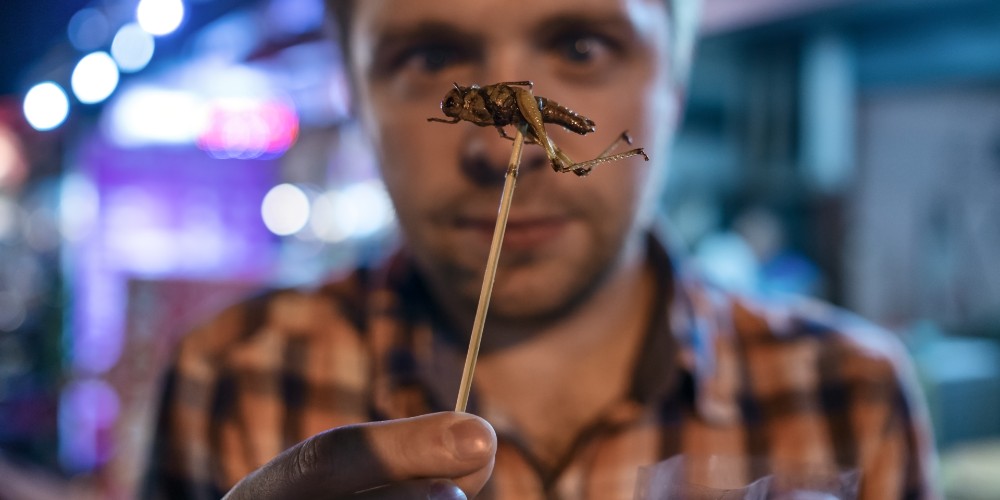
Is There Hidden Cricket Flour in Your Groceries?

BY ETHAN HUFF, NATURAL NEWS

April 6, 2024

in Cross-Posted, News

![Cricket](https://americafirstreport.com/wp-content/uploads/2024/04/Cricket-750x375.jpg)https://americafirstreport.com/wp-content/uploads/2024/04/Cricket-750x375.jpg 750w, https://americafirstreport.com/wp-content/uploads/2024/04/Cricket-300x150.jpg 300w, https://americafirstreport.com/wp-content/uploads/2024/04/Cricket-768x384.jpg 768w, https://americafirstreport.com/wp-content/uploads/2024/04/Cricket-360x180.jpg 360w, https://americafirstreport.com/wp-content/uploads/2024/04/Cricket.jpg 1000w" data-sizes=“auto” data-expand=“700”>

Discern Report is the fastest growing America First news aggregator in the nation.

(Natural News)—It is a good idea to pay close attention to everything you buy at the grocery store, especially if it comes from a major food corporation like PepsiCo, which is reportedly looking for new opportunities to slip cricket protein into popular packaged foods.

Cheetos, Quaker Granola Oats and other processed grocery foods could already contain cricket protein, depending on the brand, so make sure you read the ingredient labels closely.

You may have noticed some conservative sites and shows have dropped MyPillow as a sponsor. They’re getting more money from others so they cast Mike Lindell aside. We will NOT stop supporting MyPillow or MyStore. Please use promo code “JDR” to support them AND us.

“There are at least six or seven companies in this world that are now using crickets, insects to make flour,” explains the American farmer in the video below.

“Insect Gourmet says insect-related businesses in the Western world are producing insect proteins for foods, beverages, confectionaries, and other things such as butters, oils, and does as well as spice and seasoning.”

(Related: Chicken giant Tyson Foods recently partnered with a Dutch company to push bugs and insects on humans.)

Eating crickets will give you parasites

Believe it or not, insect and bug ingredients can also apparently be added to American food items without explicit labeling. The plan in just a few short years is to lace ground-up bugs into everything sold at conventional grocery stores.

By 2027, the plan is to reach $4.6 billion in sales from bug ingredients, amounting to around 1.4 million tons in total weight.

Archer Daniels Midland (ADM) is already producing insect ingredients at its Decatur, Ill., plant in partnership with Innova Foods. On the company’s website, it is stated falsely that crickets are 60 percent protein.

Iowa State University‘s (ISU) etymology department says that crickets are only about 12.9 percent protein, which means ADM is lying (big shocker) in order to make crickets seem more “nutritious.”

Whatever the case may be, crickets are not a suitable food item for humans. The Cleveland Clinic issued a warning that about 30 percent of all cricket farms, meaning the facilities where crickets are now being raised for human “food,” are loaded with parasites that transfer to humans who eat them.

Stock up on long-term storage beef before prices SKYROCKET. 25-year shelf life, premium cuts, all-American, no mRNA jabs. Promo code “VETERANS25” at Freedom First Beef for 25% off.

The National Institutes of Health (NIH) also expressed uncertainty about the alleged digestibility of crickets. The bugs’ exoskeletons, also known as chitin, is claimed to be a “digestible fiber,” but the NIH says it has no idea how it allegedly digests.

In other words, the human body cannot process crickets as food. And even the part that is claimed to function like “fiber” does not appear to digest, even though corporations like ADM insist it does.

Because the powers that be want only themselves to eat meat, everyone else has to eat bugs or “plants,” these being the only two protein options for poor people moving forward.

It is already a bad idea to eat processed foods from the likes of PepsiCo, by the way. Cereals from Quaker, for instance, are loaded with pesticides like glyphosate that are linked to cancer and reproductive problems.

Solar power is proving to be ineffective for the grid, but PERSONAL solar power is necessary for when the grid goes down. Grab a personal solar generator for bugging in or bugging out.

“I’ll not eat bugs and only buy fresh meat from my local butcher,” one commenter wrote about all this. “Not labeled? Just boycott their products.”

“Stop eating processed foods,” wrote another. “Eat more one-ingredient foods like eggs, avocado, and steak because processed foods are already poisoning you.”

“The more processed, the more poison they can sneak in. Just look at the health of today’s youth.”

More related news can be found at FoodCollapse.com.

Take control of your family’s food security with a Harvest Right freeze dryer. There’s a big sale happening right now….

Sources for this article include:

why are these people doing this? what’s the point